
How do we make it work?
Home practice between online speech therapy sessions
Home practice is short, guided practice between sessions, set and checked by the speech pathologist. What it looks like for...
Teenagers
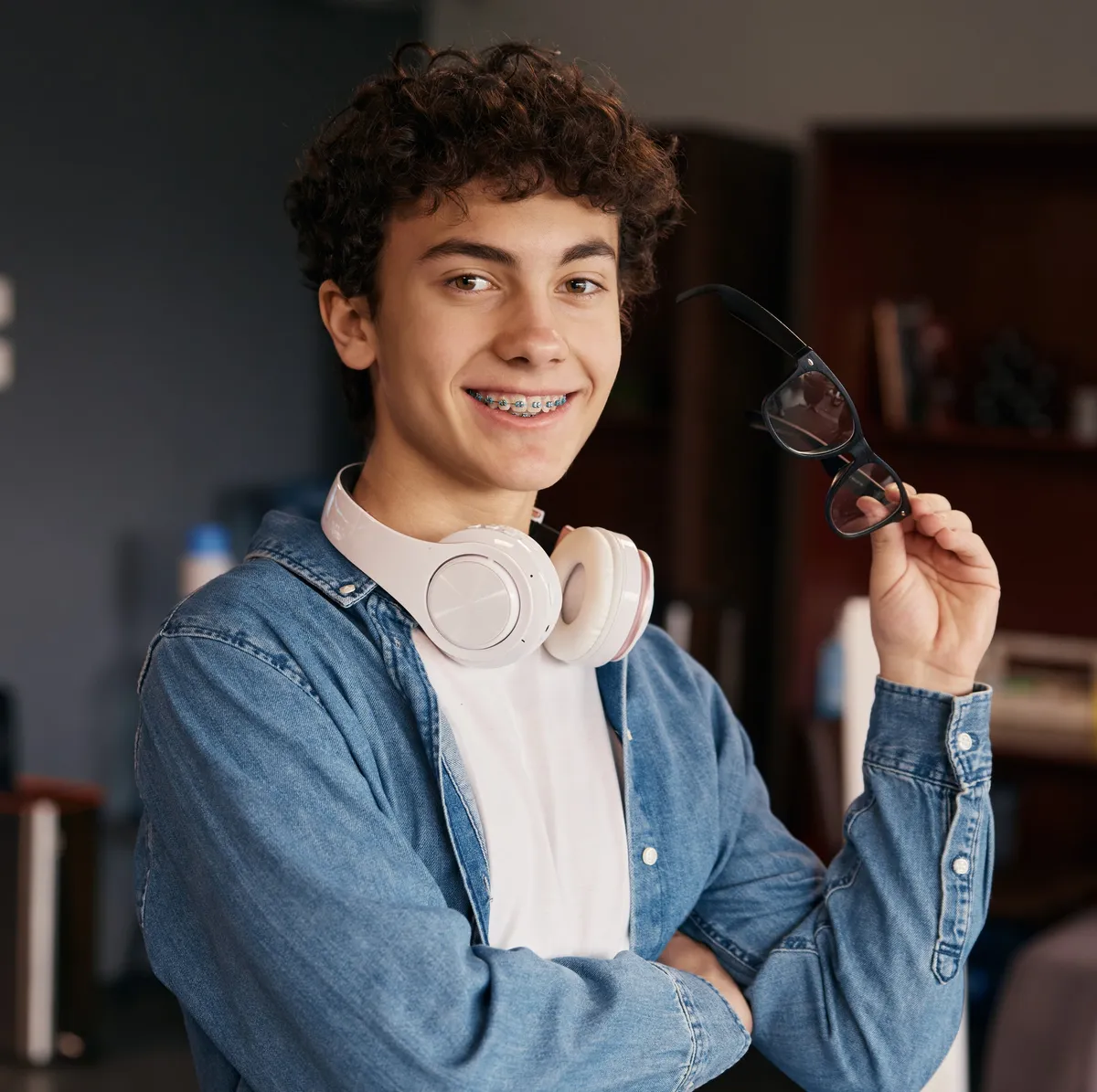
Online speech therapy for teenagers is speech therapy by video that a teenager joins on their own, from home, with headphones on. At Online Speech Therapy every session is with the same clinician, Dr Lauren Crumlish (PhD), Certified Practising Speech Pathologist, who works with teenagers up to 18 directly rather than through a parent.
The short answer
Yes. Online speech therapy for teens, also called telehealth speech therapy for teenagers, works the way it does for an adult: talking, listening, reading and practising together on a call, with no adult needed in the room. For many teenagers, video is the way they would choose, not a second best.
Online Speech Therapy is an online service: every session is by video. Dr Lauren assesses the teenager, sets the goals with them, runs each session and decides when to move on. A parent can ask at the start how they will be kept informed.
On Video
Teenagers come to speech therapy for different reasons, and most of that work is talk, reading and practice, which suits a video call. Dr Lauren works with teenagers on:
Speech clarity and lisps, practised in the words and sentences they actually use
Stuttering, worked on with the teenager directly
The language demands of high school: following lessons, explaining ideas, organising writing
Reading and spelling, where the language skills underneath are part of the difficulty
Social communication: conversation in class, with friends and in group chats
A teenager doing speech therapy by video does not sit in a waiting room, does not leave school early for an appointment, and does not have to explain to friends where they are going. They join from their own room, in their own headphones, and close the laptop when the session ends. For a teenager who is self-conscious about how they talk, that privacy can be the difference between going and refusing to go.
Communication difficulties can also become more noticeable in high school, as the social and academic demands grow, according to school education guidance for parents. So some teenagers come to speech therapy for the first time in high school, and some come back to it after a break.
A session with a teenager is between the teenager and Dr Lauren. The teenager joins the video call from a quiet room, ideally with headphones and a microphone so the session stays private and the sound is clear. Dr Lauren runs the session: the practice, the feedback and the decisions about what comes next. How online sessions work from start to finish is set out in full on a page of its own, and what you need at home for a session has the equipment list. Every teenager starts with an assessment by video.
A parent's part changes as a child gets older. With a teenager, the parent's job is mostly practical: arranging the time, making sure there is a quiet room and a working connection, and backing the practice between sessions without taking it over. With a teenager, it is worth agreeing at the start what a parent hears after sessions, and having the teenager in that conversation, so nobody is surprised.
For a teenager, it helps to ask before therapy starts what stays between the teenager and Dr Lauren and what is shared with a parent. For decisions about a young person's personal information, Australian privacy guidance from the Office of the Australian Information Commissioner treats capacity as a matter of maturity, judged case by case, and allows it to be presumed from 15 where it cannot be assessed.
Sessions by video take no travel time, so a session is only as long as the call. Session times are agreed with each family when a place is offered, and depend on Dr Lauren's availability. Sessions are set in Australian Eastern Standard Time all year, so a family in another time zone, or where daylight saving moves the clock, should check what that means for them.
Research on video therapy with teenagers is thinner than for younger children, and the trials are small. In one 2012 Australian trial, three teenagers aged 13 to 16 had stuttering treatment entirely by webcam (Carey and colleagues). The wider evidence is set out on what the research on online speech therapy shows. Some needs are better met in the same room; the guide to when online speech therapy suits a child, and when it does not lists them.
How each kind of work runs by video has a page of its own: speech sounds and lisps, stuttering, language, literacy and dyslexia and social communication.
Getting Started
Every teenager starts the same way, with Dr Lauren in charge from the assessment on.
A parent applies, and the teenager can help fill in the application. Our team reviews every application.
Dr Lauren assesses the teenager by video, then explains what she found and what she recommends.
The teenager joins each 45 minute session from home. Dr Lauren runs the session and adjusts the plan as the teenager progresses.
Short practice the teenager can do alone, with the parent's support where it helps.
Fees
Every teenager starts with an initial assessment. For stuttering or speech clarity it is usually the Short Assessment ($590). For language, literacy or social communication it is usually the Mid-Length Assessment ($890), or the Long Assessment ($1,290) when both language and literacy need looking at.
Therapy
One hour of service: 45 minutes of therapy by video, and 15 minutes of preparation and notes
$193
Every family starts with an assessment
$590
Usually for late talkers, stuttering and speech clarity
$890
Usually for school-age language, literacy or social communication
$1,290
Usually for both language and literacy in a school-age child
Medicare rebates are available with a doctor's referral, and private health may apply. Self-managed and plan-managed NDIS participants are welcome; Online Speech Therapy is not a registered NDIS provider. See fees in full
Questions Parents Ask
Yes. At Online Speech Therapy, Dr Lauren works with teenagers directly, so a teenager usually joins sessions on their own. A parent arranges the time and the room, and can ask at the start how they will be kept informed.
No. Teenagers up to 18 can work with a speech pathologist, and a video call suits many teenagers better than a clinic visit: they join from their own room, on their own timetable, without a parent driving them across town. What therapy can achieve depends on the teenager and the difficulty, which is why every teenager starts with an assessment. Nobody can promise a result before that.
Plenty of teenagers are reluctant at first. Many are more willing when they can do it privately from their own room, without missing school or being seen going to appointments. Involve your teenager in the decision and in the application, and let them read this page.
No referral is needed to apply. A doctor's referral is needed to claim a Medicare rebate, so ask your GP before the assessment if you want to claim. The guide to Medicare, the NDIS and private health for video sessions explains the referral.
What Dr Lauren shares with a school, if anything, is decided with the family and the teenager. Nothing is sent to a school without the family's agreement.
A laptop or tablet with a camera, a steady internet connection, headphones with a microphone and a room where they will not be overheard. The technology and set-up page has the full list.












Work With Dr Lauren
Dr Lauren works with a small number of families and has limited availability. Tell us about your child, and our team will review your application.
Apply Now