
Who do we choose?
How to choose an online speech pathologist in Australia
Find out exactly who will work with your child, check they are a Certified Practising Speech Pathologist and ask whether...
Autistic Children
Online speech therapy for autism can suit a child who is more at ease at home, and a family who wants to learn ways of connecting that fit the child's own day. It is not the right start for every autistic child. Dr Lauren Crumlish (PhD), a Certified Practising Speech Pathologist, works with autistic children and teenagers by video, with a parent taking part.
The short answer
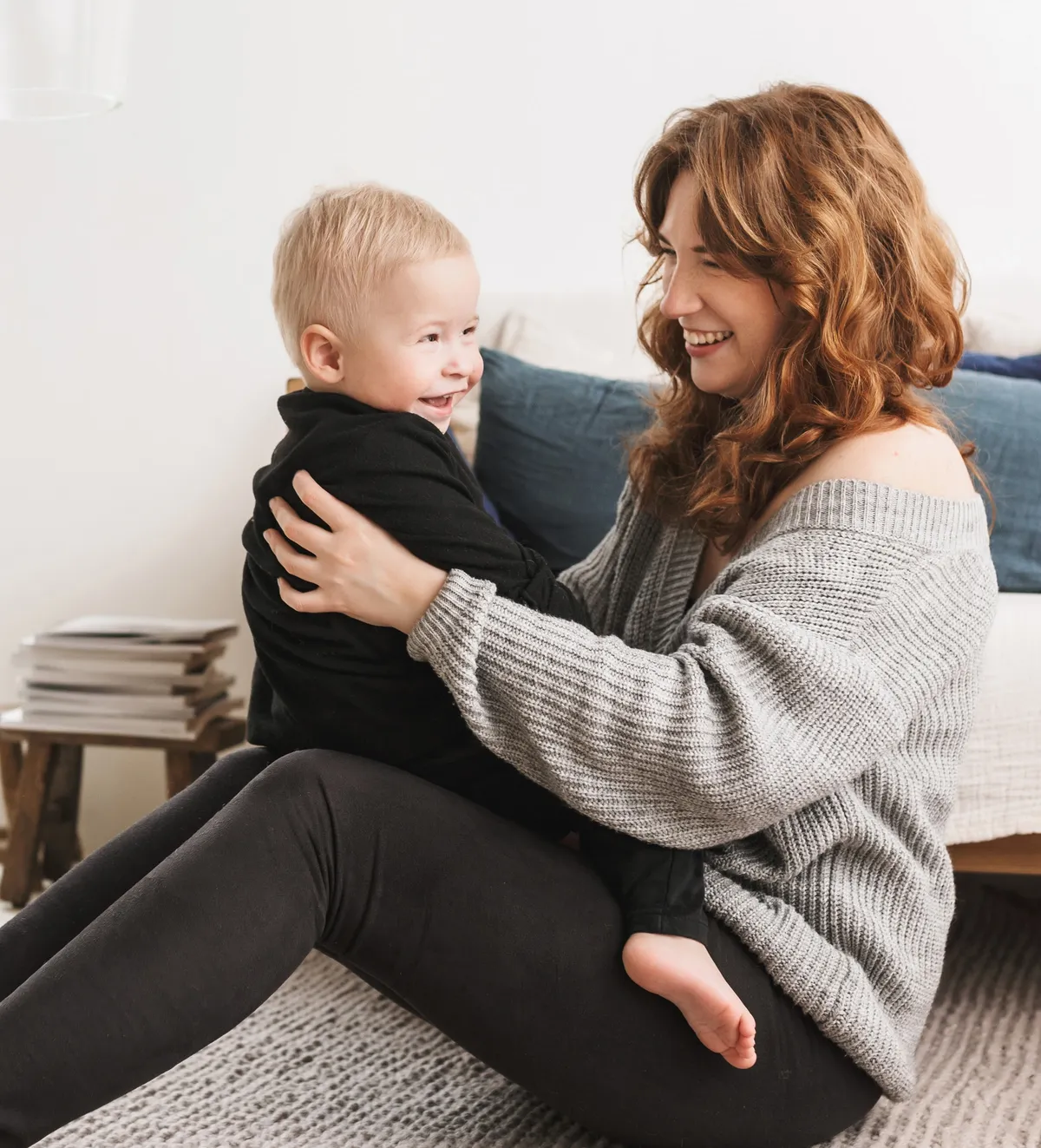
Video sessions tend to suit autistic children who are calmer in familiar surroundings, who find travel, waiting rooms or new places hard, or whose parents want to be coached to use strategies at home. They tend not to suit a child who is very distressed by a screen or a voice from a device, or whose main need is hands-on, such as choosing a communication device.
Dr Lauren's part is communication: how your child understands, expresses themselves, plays and connects with other people. She does not diagnose autism. A child does not need a diagnosis to start speech therapy with her.
On Video
Sessions are shaped around the child, so they look different from one family to the next. These are common ways video sessions are set up; Dr Lauren decides with you which fit your child.
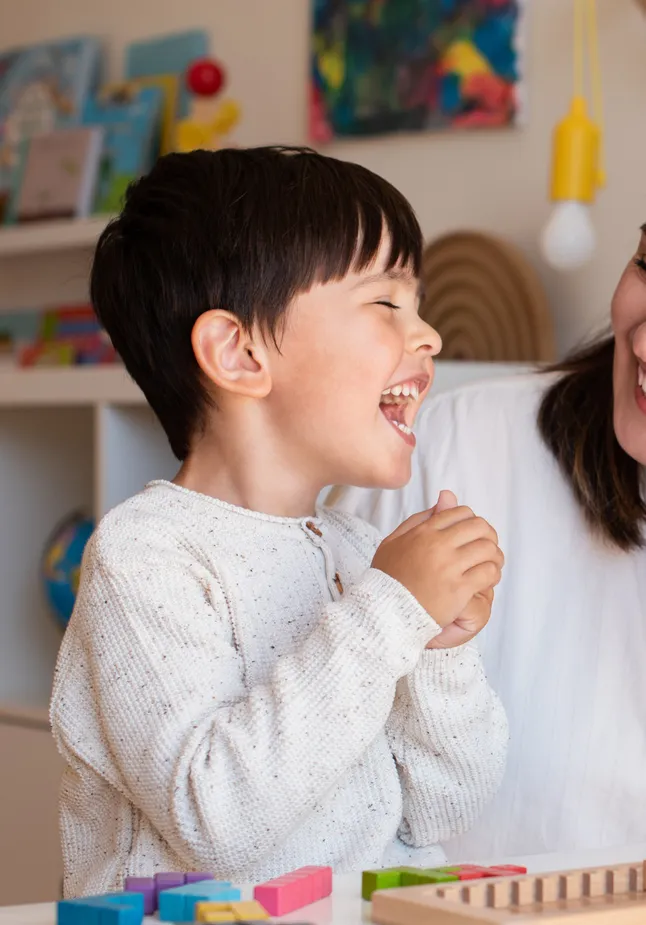
A parent playing with the child while Dr Lauren watches and coaches in the moment
The child's own interests, toys or favourite topics as the starting point for interaction
The camera on the play space, with no expectation that the child faces the screen
Shorter blocks of activity, with movement breaks when the child needs them
Time with the parent alone to plan goals and talk through what happened
For older children and teenagers, sessions directly with Dr Lauren, with a parent nearby if needed
Online speech therapy tends to suit an autistic child when:
It tends not to suit, at least as a starting point, when:
The research on coaching parents of autistic children by video is still thin. A 2023 review of nine studies found the evidence on children's social communication insufficient, and every study had a high risk of bias in at least one area. The evidence is set out with its limits on does online speech therapy work? The full list of when in-person help is the better choice is in is online speech therapy right for my child?
In a coached session the parent plays and Dr Lauren coaches. She watches how your child communicates (where they look, what they reach for, the sounds, words or movements they use) and points out moments you may not have noticed. She suggests one change, such as waiting a little longer or joining in with what your child is already doing, then watches what happens when you try it and talks it through with you.
Coaching by video happens in the place where your child spends their days, with their own things around them, so what you learn is already in the setting where you will use it. With older children and teenagers, Dr Lauren works with the young person directly; see online speech therapy for teenagers.
Dr Lauren is trained in DIR Floortime and uses it with families online. ICDL, the organisation behind it, describes Floortime as a respectful, playful and engaging way of supporting a child's development through relationships. Following the child's lead is central, and ICDL describes this as following the child's emotions: noticing what interests your child and using it to draw them into longer back and forth.
Floortime suits video because so much of it is done by the parent. ICDL notes that with good coaching, a family does not need a professional in the home all the time. By video, you are on the floor with your child and Dr Lauren coaches you from the screen, reading your child's cues with you.
On a call, that means the relationship between you and your child is where the work happens. The goals are about your child being understood and understanding others, built from what your child already does, rather than about changing who your child is.
A video session is not an autism assessment, and Dr Lauren does not give a diagnosis: in Australia that is done by a paediatrician, psychiatrist or psychologist-led team. What she looks at on the call is how your child communicates, and that does not depend on a label. She works with autistic children with and without a formal diagnosis, so online sessions can start while a family is on a waiting list.
Online Speech Therapy is not a registered NDIS provider. Self-managed and plan-managed NDIS participants are welcome, and NDIA-managed funding cannot be used. Medicare rebates are available with a doctor's referral, and private health may apply. Online Speech Therapy is not a Thriving Kids provider. The guide to Medicare, the NDIS and private health for online speech therapy explains each.
For a young autistic child who is not yet talking, much of the work looks like the coaching described on online speech therapy for toddlers and late talkers. For children who are not autistic but find conversation and friendships hard, see online social communication therapy. How the first appointment runs is on online speech and language assessment.
Step By Step
Every family starts with an assessment, held by video like every session.
Tell us about your child, including what they enjoy and what helps them feel settled. Our team will review your application.
Dr Lauren assesses how your child communicates, through play, observation and your account, and agrees goals with you.
Dr Lauren runs each session, coaching a parent in play or working with an older child directly, and adapts sessions to your child.
Dr Lauren tracks what is changing, decides when goals move on, and changes the plan with you.
Fees
Dr Lauren recommends the assessment that fits your child once she has read your application. Therapy is charged per session.
Therapy
One hour of service: 45 minutes of therapy by video, and 15 minutes of preparation and notes
$193
Every family starts with an assessment
$590
Usually for late talkers, stuttering and speech clarity
$890
Usually for school-age language, literacy or social communication
$1,290
Usually for both language and literacy in a school-age child
Not a registered NDIS provider: self-managed and plan-managed participants are welcome; NDIA-managed funding cannot be used. Medicare rebates are available with a doctor's referral, and private health may apply. See fees in full
Questions Parents Ask
Online speech therapy works well for some autistic children and is a poor fit for others. Research on telehealth for autistic children is promising but small. A 2025 review of telehealth early intervention for children under three, more than half of its studies with autistic children, found outcomes comparable to in-person help where the two were compared. A 2023 review found the evidence on social communication insufficient. Whether it suits your child is worked out at the start.
Yes. Dr Lauren works with autistic children with and without a formal diagnosis, so online sessions can start while you wait. She does not diagnose autism herself: that is done by a paediatrician, psychiatrist or psychologist-led team, and your GP can arrange a referral. Her part is your child's communication, which can be supported either way.
Your child does not always need to face the screen. A common set-up is the camera on the play space, with Dr Lauren coaching the parent who is with the child, and she works out with you what suits your child. If video still does not suit your child, in-person help may be the better choice.
Yes. Dr Lauren Crumlish works with autistic children and teenagers up to 18 by video. With teenagers she works with the young person directly, with a parent involved as the family prefers.






Work With Dr Lauren
Dr Lauren works with a small number of families and has limited availability. Tell us about your child, and our team will review your application.
Apply Now