
How do we make it work?
Home practice between online speech therapy sessions
Home practice is short, guided practice between sessions, set and checked by the speech pathologist. What it looks like for...
Language, Online
Language therapy can be done by video for most school-age children, because the work is talking, listening, looking at pictures and planning what to say, all of which travel through a screen. Dr Lauren Crumlish (PhD), Certified Practising Speech Pathologist, builds each session around stories, pictures and your child's own schoolwork on a shared screen, after an assessment that shows her which language skills to work on first.
The short answer
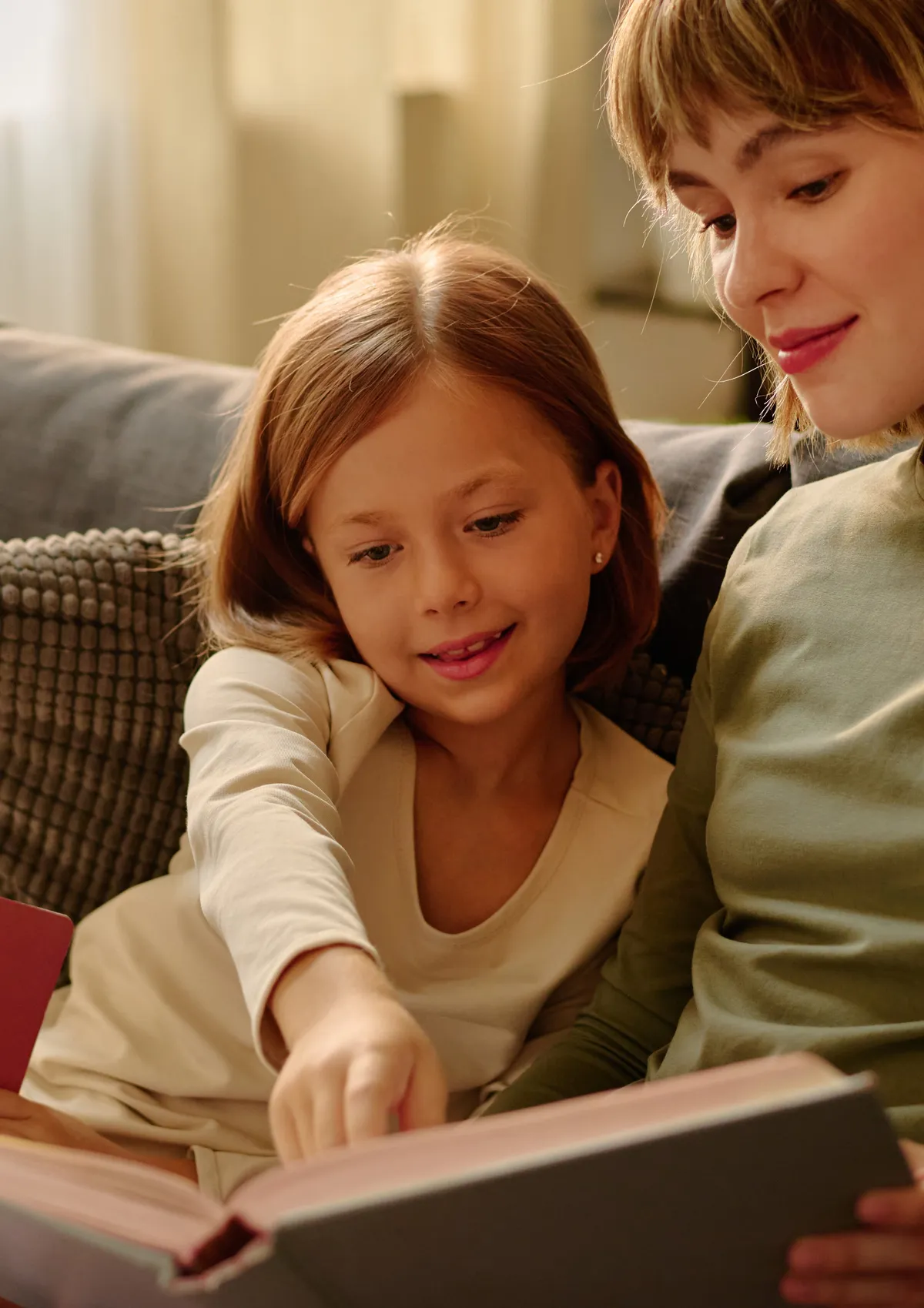
Language therapy for a school-age child can be done online because almost everything used for language work can be seen and heard on a video call. A picture book held up to the camera, a picture scene on a shared screen, a story plan drawn together and the child's own talking all come through clearly. Nothing needs to be handled by the clinician in the room.
What changes online is where the materials come from and who is watching. A child's real schoolwork is on the table beside them, and a parent can see exactly what Dr Lauren asks for and how.
On Video
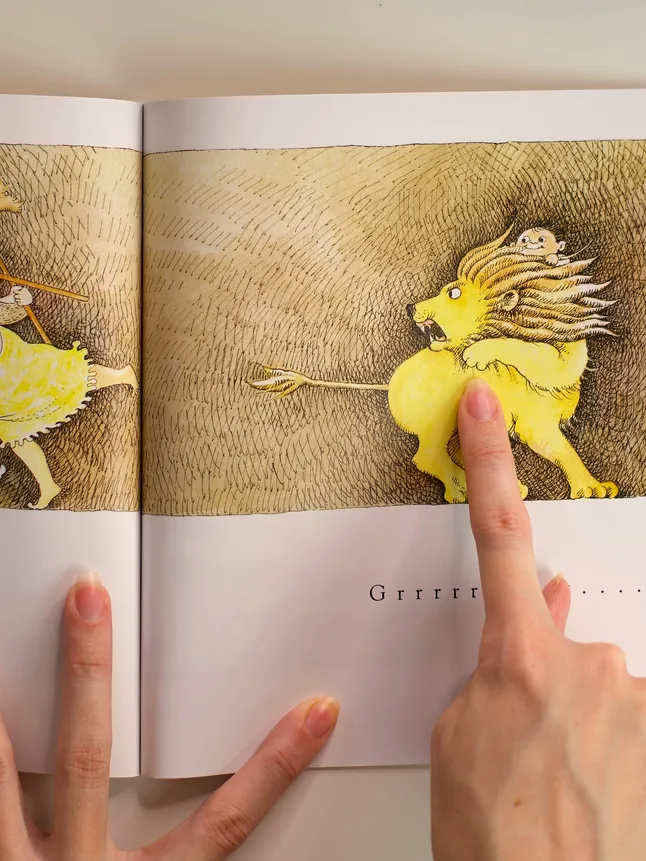
Online language therapy uses materials that work as well through a camera as across a table. Dr Lauren chooses them for each child's goals; these are the kinds of things a session can draw on.
A picture book turned to the camera, to talk about what is happening, why, and what might happen next
A busy picture scene on the shared screen for describing, asking and answering questions
A story planner built together on screen: who, where, what went wrong, what they did, how it ended
The child's own schoolwork: a class reading text, a writing task, the words for this term's topic
New words mapped on screen by meaning, sound and use
This page is for children at school whose understanding, vocabulary, sentences or storytelling lag behind other children their age. Parents often call this a speech delay or a language delay. A two or three year old who is not talking much yet needs a different model, set out on online speech therapy for toddlers and late talkers. Teenagers have a page of their own. If you are not sure where your child fits, the online speech and language assessment is where every family starts, and how online speech therapy works walks through a session.
On a call, developmental language disorder (DLD) tends to show in the talk itself: a child who answers a different question from the one asked, loses the thread of a story halfway through, or reaches for a word and settles on "that thing". Speech Pathology Australia's fact sheet describes DLD as lifelong, estimates it affects about 1 in 14 people, and is clear that parenting does not cause it. Speech pathologists are the professionals who assess and diagnose it.
For a child with DLD, going online changes the room, not the goals. The goals come from the assessment and are the same ones Dr Lauren would set in person: the words, sentence patterns, understanding and storytelling that matter most for this child at school and at home.
Dr Lauren leads the therapy. She assesses the child's language first, decides which goals come first, runs each session with the child at the screen, measures progress against those goals and decides when to move on or change the plan.
School-age children work with her directly. A younger child usually has a parent within reach, and Dr Lauren shows the family the short practice for the week step by step. The family's part is that guided practice, not the therapy itself, and setting up the call, for which technology and set-up has the checklist. How practice fits into a week is set out in the guide to home practice between online sessions.
School comes into an online session through the child's own work. Because the child is at home, this term's reading, a writing task or the words for a class topic can be used in the session. The language practised with Dr Lauren is then the language the child meets in class.
The family decides what the school is told. Parents can pass the goals from the assessment on to the class teacher, so the same words and supports are used in class. Language and reading are closely linked; if reading or spelling is the main worry, see online literacy support.
For primary school children, the research suggests language therapy by video can work as well as in person, but the evidence is limited. A 2017 systematic review of seven studies with children aged 4 to 12 found similar gains by telehealth and in person on five of six measures. The authors called the evidence limited but promising, and most of the studies were about speech sounds rather than language. The full picture, by condition and age, is on the page does online speech therapy work?
If your child's hearing has not been checked, ask your GP to arrange a hearing test with an audiologist first; it can happen before or alongside online therapy. In-person help is the better start when a child cannot take part in a video call even with an adult beside them. The full list is in the guide is online speech therapy right for my child?
Step by Step
Online Speech Therapy is an online service: every session is by video.
Tell us about your child in the application. Our team will review your application.
Every family starts with an assessment of the child's understanding, vocabulary, sentences and storytelling.
Each session is 45 minutes of therapy by video, with the child at the screen.
A short, guided practice task for the week, shown step by step.
Fees
The Mid-Length Assessment ($890) is usually the one for a school-age child's language. The Long Assessment ($1,290) covers both language and literacy, for a child whose reading and spelling are also a worry.
Therapy
One hour of service: 45 minutes of therapy by video, and 15 minutes of preparation and notes
$193
Every family starts with an assessment
$590
Usually for late talkers, stuttering and speech clarity
$890
Usually for school-age language, literacy or social communication
$1,290
Usually for both language and literacy in a school-age child
Medicare rebates are available with a doctor's referral, and private health may apply. Online Speech Therapy is not NDIS registered: self-managed and plan-managed participants are welcome, and NDIA-managed funding cannot be used. See fees in full
Questions Parents Ask
Yes. Language therapy for a school-age child can be done by video because the work is talking, listening, pictures, stories and schoolwork, all of which can be seen and heard on a call. Dr Lauren Crumlish leads every session herself.
A 2017 systematic review of seven studies with children aged 4 to 12 found similar gains by telehealth and in person on five of six measures, and called the evidence limited but promising. Most of those studies were about speech sounds, so the evidence for language work specifically is thinner.
DLD is a lasting difficulty with spoken language: understanding what is said, finding words and putting sentences and stories together. Speech Pathology Australia estimates about 1 in 14 people have it and says parenting does not cause it. On a video call it shows in the conversation itself, which is why it can be assessed and worked on online.
No diagnosis is needed to apply. The assessment is the first step, and it shows which parts of language are hard for your child. Speech pathologists are the professionals who assess and diagnose developmental language disorder.
No. Your child needs to see and hear the screen and talk. A parent sets up the call, and the technology and set-up page has a checklist for the device, internet and room.
No. Language therapy works on the spoken language underneath schoolwork: understanding, vocabulary, sentences and telling a story. It is led by a speech pathologist, not a tutor.









Work With Dr Lauren
Dr Lauren works with a small number of families and has limited availability. Tell us about your child, and our team will review your application.
Apply Now